Commercial Tree Removal Services for Offices, Schools, and Parks
Managing trees on commercial and public properties rarely comes down to aesthetics alone. On office campuses, school grounds, and municipal parks, every tree exists in a space with foot traffic, vehicles, buildings, utilities, and liability concerns. A mature oak shading a parking lot can be a real asset until decay develops in the trunk, roots begin lifting pavement, or a large limb hangs over a playground. At that point, tree care becomes an operational issue, not just a landscape one.
Commercial tree removal has a different rhythm than residential work. The stakes are broader, the approvals can be slower, and the work zone is usually more complex. Facilities managers, school administrators, property owners, and parks departments have to balance safety, budgets, public perception, and long-term landscape health. Removing a tree is sometimes the right decision, but it is rarely the first question an experienced contractor or arborist should ask. The better question is whether removal is necessary, and if it is, how to do it with the least disruption and the most foresight.
What makes commercial tree removal different
A tree overhanging a backyard fence is one thing. A tree leaning over a school drop-off lane at 7:30 in the morning is another. Commercial sites operate under tighter scheduling, stricter safety requirements, and more public visibility. There may be restricted access hours, noise limitations, permit requirements, and insurance standards that far exceed what a small residential project demands.
On office properties, the Tree Pruning & Crown Shaping challenge often lies in continuity. Businesses do not want blocked entrances, lost parking, or noisy work during tenant meetings. On school campuses, timing matters even more. Contractors may need to work during holiday breaks, weekends, or in narrow windows between arrival and dismissal. In parks, access can be physically difficult, especially where crews must protect trails, irrigation, lawns, monuments, or habitat areas while removing very large material.
There is also a communication piece that gets overlooked. When a prominent tree comes down, people notice. Employees ask why it was removed. Parents question whether the grounds are still safe. Park users sometimes assume healthy trees are being taken out unnecessarily. A well-run project includes not just Tree Removal Services, but a clear rationale based on documented condition, site use, and future risk.
The decision to remove should be earned
A reputable contractor does not approach every declining tree with a chainsaw first. Many trees can remain in service for years with thoughtful intervention. That is where Certified Arborist Consultation matters. An arborist can distinguish between a tree that looks rough but is structurally stable, and one that appears decent from a distance yet carries significant internal decay or root failure risk.
Some common triggers for removal include severe storm damage, root plate movement, advanced fungal decay at the base, repeated limb failures, major trunk cracks, canopy dieback tied to irreversible decline, and interference with infrastructure that cannot be reasonably mitigated. In fire-prone regions, Wildfire Mitigation Tree Services may also justify removing trees too close to structures or those carrying dense ladder fuels into the canopy.
The gray areas are where experience shows. A tree with included bark at a union over a school courtyard may still be retained through Tree Cable and Bracing if the structure is otherwise sound and the target area can be managed. A large park tree with one compromised scaffold limb may respond well to Tree Pruning & Crown Shaping instead of removal. On the other hand, a heavily decayed tree standing over a staff parking area may not be a candidate for preservation, even if it still leafs out each spring.
Risk is not abstract on active properties
Risk assessment in commercial settings is about probability and consequence together. A modest defect can become urgent if the target underneath is constant. That is why Dangerous Tree Assessment and Removal is such an important category of work for schools, offices, and parks. The same crack means different things depending on what is beneath it. Over a remote fence line, monitoring may be acceptable. Over a school entrance, it probably is not.
I have seen situations where property teams delayed removal because the tree still looked green. That visual cue can be misleading. One mature shade tree near a multi-tenant office had a full canopy but extensive root decay from years of over-irrigation and grade changes. The first sign most people noticed was a slight lean after heavy winter rain. Once the root collar was exposed and sounding tests were done, the extent of compromise was obvious. The crew removed it in sections over a weekend to avoid closing the loading lane during business hours. That job was not about appearance. It was about preventing a failure in a place with daily pedestrian traffic.
Schools present another pattern. Playgrounds, lunch areas, and parent pick-up lines compress a lot of people into small zones. Limb drop that might be tolerated in a low-use landscape cannot be tolerated there. Parks are different again. They often have more room for exclusion zones, but they may also contain older specimen trees, uneven terrain, and higher public scrutiny. Every site changes the tolerance threshold.
Planning the job around people, not just the tree
The physical act of removal is only one part of a commercial project. Access, rigging, traffic control, and public protection often take more time to plan than the cutting itself. A tree standing between parked cars and a building may require crane work. A removal beside a playground may need fencing and a controlled debris path. A park tree near trails may need brush hauled out by smaller equipment to avoid ground damage.
Good contractors spend time walking the site before they price or schedule the work. They look up, down, and around. They identify utility lines, irrigation heads, pavement vulnerability, rooftop exposure, and the location of HVAC units, signs, and light poles. They note whether the ground will support heavy equipment, and whether gates are wide enough for loaders or stump grinders. They ask when people arrive, where buses turn, and what areas must stay open.
A careful pre-job plan usually addresses these points:
- Access routes for crews and equipment without disrupting essential site operations
- Pedestrian and vehicle control during active cutting and debris removal
- Protection for adjacent surfaces, utilities, and landscape features
- Timing that fits occupancy patterns, weather, and permit conditions
- Cleanup standards, including whether Stump Removal & Grinding is part of the same scope
That level of planning is what separates a smooth project from a chaotic one. On a school campus, for example, the difference between starting at 6 a.m. And 8 a.m. Can be the difference between a controlled work site and conflict with parents, buses, and staff. On office properties, weekend work may cost more, but it often prevents much larger business disruption.
Why removals often begin with pruning and inspection history
One of the strongest signs of responsible tree management is a service history that includes routine inspection and pruning before failure forces the issue. Tree Pruning & Crown Shaping can reduce end weight, improve clearance, remove deadwood, and slow the progression of defects in some cases. It cannot cure decay or reverse root failure, but it can meaningfully extend the service life of structurally manageable trees.
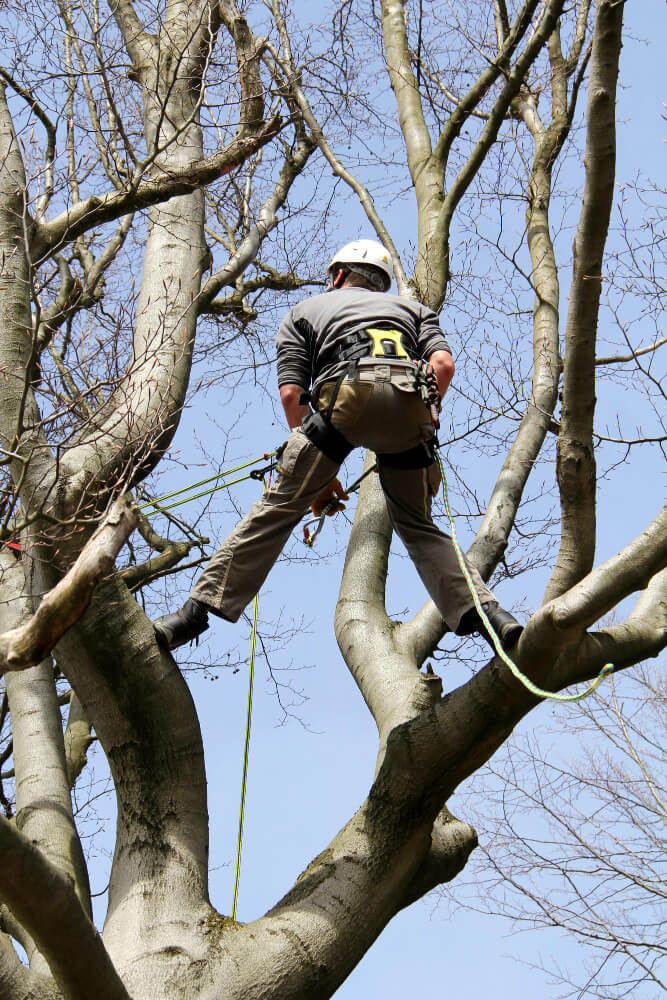
For property managers, there is also a documentation value. If a tree has been inspected periodically, pruned appropriately, and monitored by qualified professionals, decisions later on are easier to defend. That matters when a board, parent group, insurance carrier, or tenant asks why a particular tree was removed. A record showing prior mitigation, follow-up assessments, and eventual decline tells a much clearer story than a sudden reactive removal after complaints.
That said, over-pruning is a real problem in commercial settings. I still see trees that were “thinned” so aggressively they became more vulnerable to sunscald, weak regrowth, and wind stress. Cost-driven shortcuts can create expensive downstream problems. The point of pruning is not to make every tree smaller. It is to improve structure, clearance, and risk profile within species-appropriate limits.
Emergency work is a category of its own
Storms, vehicle strikes, lightning, and sudden structural failure do not wait for procurement cycles. Emergency Tree Services are often needed when a limb blocks an access road, a split trunk threatens a building, or windthrow leaves a tree suspended in another canopy. In those cases, speed matters, but so does judgment.
Emergency work on commercial properties tends to involve more moving parts than emergency work at a residence. There may be security gates, internal approval chains, after-hours contacts, and public safety officers to coordinate with. In schools and parks, a hazardous tree may need to be isolated immediately even if full removal happens the next morning. Temporary closure, hazard tape, and rapid arborist review can prevent a bad situation from becoming worse.
One practical issue many clients underestimate is partial failure. A tree does not have to be fully down to be dangerous. A hung-up stem under tension, a cracked leader over a roofline, or a root plate that has begun to lift can be harder to dismantle safely than a complete fallen tree. These are not jobs for improvised crews with pickup saws. Dangerous Tree Assessment and Removal under emergency conditions requires proper rigging, equipment, and experienced lead personnel who understand wood tension and drop zone behavior.
The stump question is not cosmetic
After the trunk and canopy are gone, many clients wonder whether the stump really needs attention. Sometimes it does, sometimes it does not. The answer depends on use, future planting plans, trip hazards, pest concerns, and space constraints. On active commercial sites, Stump Removal & Grinding is often part of the practical finish, not an optional extra.
A stump in a lawn behind an office may be tolerable for a while. A stump near a school walkway or inside a park activity zone is another matter. It can become a trip hazard, interfere with mowing, attract complaints, and complicate replanting. Grinding below grade allows for soil restoration and, in many cases, a cleaner reset for future landscape work.
Full stump removal, including major root excavation, is more disruptive and not always necessary. It may be warranted when new hardscape, foundations, or utility work is planned in the same area. Grinding is usually the more efficient choice when the goal is surface restoration. The right scope depends on what comes next for that space.
Preservation tools that can prevent unnecessary removals
Not every high-value tree with a defect needs to come down. In the right situation, Tree Cable and Bracing can provide supplemental support that reduces the likelihood of failure in weak unions or overextended limbs. This works best when the tree is otherwise healthy, the defect is well understood, and the target zone justifies the investment in periodic inspection and maintenance.
The key phrase is “in the right situation.” Cabling is not a cure for advanced decay, major root instability, or severe whole-tree decline. It is stump removal a management strategy, not a guarantee. The same applies to pruning-based mitigation. There is always a line where preservation tools stop being sensible and removal becomes the safer, more cost-effective option.
That line is often crossed quietly. A tree may survive one major storm and lead stakeholders to believe it is fine. Then another season brings additional decay, another split, or root disturbance from adjacent construction. Conditions change. That is why periodic Certified Arborist Consultation is so valuable. It keeps decisions current instead of relying on an opinion formed years earlier.
Offices, schools, and parks each have their own priorities
Office properties often prioritize continuity, appearance, and liability. Shade trees can reduce heat load and improve tenant perception, so removal decisions are usually weighed against replacement planning and visual impact. The best projects pair necessary removals with a realistic replanting strategy rather than simply leaving an empty space in the landscape.
Schools prioritize life safety and predictable daily use. Trees near play areas, drop-off loops, portable classrooms, and sports facilities deserve close attention. It is also worth considering educational value. Mature trees are part of the campus environment, and preserving sound specimens where possible has real community benefit. The challenge is that schools cannot accept the same level of residual risk that might be tolerated on a low-occupancy site.
Parks sit at an interesting intersection of safety, ecology, and public expectations. Removing a large tree in a park can trigger strong reactions, especially if people associate it with shade, history, or habitat. Yet parks departments also manage trails, events, picnic areas, and aging tree populations. Some removals are unavoidable. Others can be staged over time, paired with habitat replacement, or limited to high-risk zones while lower-risk snags are retained where ecologically appropriate and public access is controlled.
Cost, value, and the false economy of delay
Commercial clients naturally want predictable pricing. Tree work, however, does not always reward delay. A tree that could be removed safely with standard equipment in mild weather can become far more expensive after storm damage, access deterioration, or structural worsening. Waiting for a defect to “prove itself” often means paying emergency rates later and accepting more collateral disruption.
The cheapest proposal is not always the lowest total cost. A crew that underbids by skipping traffic control, minimal cleanup, inadequate insurance, or poor pruning standards can leave a site in worse shape than it found it. Soil rutting, bark strikes on adjacent trees, damaged irrigation, and improper cuts all create secondary costs. Commercial tree care should be evaluated on scope clarity, safety process, equipment fit, crew experience, and communication, not just the line-item total.
When reviewing proposals, it helps to clarify whether hauling, stump grinding, traffic control, site protection, permit assistance, and debris disposal are included. Those details matter. So does the quality of the assessment behind the recommendation. If one contractor says a tree must come down immediately and another says it can be managed, ask what evidence each is relying on.
A practical standard for choosing a provider
The best commercial tree contractors combine field skill with restraint. They know how to remove a hazardous tree efficiently, but they also know when not to remove one. That balance usually comes from experience across many site types and from a habit of working closely with arborists, facility teams, and risk managers.
A strong provider generally brings the following to the table:
- Clear insurance coverage and safety protocols suited to public or occupied properties
- Experience with cranes, rigging, and access constraints on larger sites
- Willingness to coordinate around school calendars, tenant needs, or park operations
- Sound arboricultural judgment, including preservation options where appropriate
- Detailed scope language so there is no confusion about cleanup, grinding, or follow-up work
That last point matters more than most clients realize. Ambiguity is where many frustrations start. If the proposal does not state whether logs are removed, whether stump grindings stay on site, or whether restoration is included, assumptions will fill the gap.
Tree removal should fit a larger landscape strategy
The most effective commercial tree programs do not treat removal as an isolated event. They link removals to replanting, inspection cycles, pruning schedules, and long-term site goals. If an office campus loses several mature trees in a short span, heat and visual character change immediately. If a school removes shade near a blacktop play area, summer use may be affected. If a park loses aging canopy without succession planting, the impact can last for decades.
That is why removals should be paired with planning. Sometimes that means replacing one large tree with several smaller, better-sited species. Sometimes it means changing irrigation practices that contributed to root disease in the first place. In wildfire-prone areas, it may mean redesigning planting zones so fuel loads are lower near structures while canopy cover is maintained farther out through thoughtful species selection and spacing.
Commercial Tree Removal Services are at their best when they are part of a disciplined property management approach, not just a reaction to the latest complaint or storm. When assessment is honest, scheduling is thoughtful, and the work is done with site use in mind, removal can solve a real safety problem without creating three new ones.
For offices, schools, and parks, that is the standard worth aiming for. The tree itself matters, but so does everything around it: the people beneath it, the buildings beside it, the pavement over its roots, and the long-term health of the landscape after the truck pulls away.
Name: Ace Tree Services Ltd.
Address: 4656 Wallace Hill Rd, Kelowna, BC V1W 4C2, Canada
Phone: 250-212-9593
Website: https://acetree.ca/
Email: [email protected]
Hours:
Sunday: Closed
Monday: 7:00 AM–5:00 PM
Tuesday: 7:00 AM–5:00 PM
Wednesday: 7:00 AM–5:00 PM
Thursday: 7:00 AM–5:00 PM
Friday: 7:00 AM–5:00 PM
Saturday: 7:00 AM–5:00 PM
Time zone: Pacific Time
Open-location code / Plus code: RHF8+8G Kelowna, British Columbia, Canada
Map/listing URL: https://www.google.com/maps/search/?api=1&query=Google&query_place_id=ChIJxRVIBx2LfVMRNRSkp6-IC0U
Embed iframe:
Socials:
https://www.facebook.com/p/Ace-Tree-Services-61585901931447/
Ace Tree Services Ltd. provides professional tree care from its Kelowna location on Wallace Hill Road.
The official website lists tree removal, stump removal and grinding, tree pruning and crown shaping, emergency tree services, certified arborist consultation, dangerous tree assessment and removal, tree cabling and bracing, and wildfire mitigation.
Ace Tree Services serves homeowners, businesses, and property owners in Kelowna and throughout the Okanagan Valley.
The company’s official site highlights ISA Certified Arborist support, local Okanagan experience, and fully insured tree service work.
Customers can contact Ace Tree Services for planned tree maintenance, high-risk removals, storm-related tree concerns, pruning, stump grinding, and arborist consultation needs.
The supplied public listing address is 4656 Wallace Hill Rd, Kelowna, BC V1W 4C2, near rural and residential service areas in southeast Kelowna.
For tree services in Kelowna and the Okanagan, call 250-212-9593, email [email protected], or visit https://acetree.ca/
The public map listing uses plus code RHF8+8G Kelowna, British Columbia, Canada and can help customers find Ace Tree Services Ltd. near Wallace Hill Road.
Popular Questions About Ace Tree Services Ltd.
What does Ace Tree Services Ltd. do?
Ace Tree Services Ltd. provides tree removal, stump removal and grinding, tree pruning and crown shaping, emergency tree service, certified arborist consultation, dangerous tree assessment and removal, tree cabling and bracing, and wildfire mitigation.
Where is Ace Tree Services Ltd. located?
Ace Tree Services Ltd. is listed at 4656 Wallace Hill Rd, Kelowna, BC V1W 4C2, Canada.
What phone number should customers call?
Customers can call Ace Tree Services Ltd. at 250-212-9593.
What is the email address for Ace Tree Services Ltd.?
The supplied email address is [email protected].
What are Ace Tree Services Ltd.’s hours?
The supplied listing hours show Monday through Saturday from 7:00 AM to 5:00 PM, with Sunday closed, Pacific Time. The official website lists 7:00 AM to 5:00 PM, Monday through Friday, so customers should confirm Saturday availability before booking.
Does Ace Tree Services Ltd. provide emergency tree service?
Yes. The official website lists emergency tree services, including emergency tree removal, dangerous tree assessment, emergency stabilization, and limb or branch cleanup.
Does Ace Tree Services Ltd. offer arborist consultations?
Yes. The official services page lists certified arborist consultation as one of the company’s Okanagan tree services.
Does Ace Tree Services Ltd. provide stump grinding?
Yes. The official services page lists stump removal and grinding as a service.
What areas does Ace Tree Services Ltd. serve?
The official website states that Ace Tree Services serves Kelowna and the Okanagan Valley.
How do I contact Ace Tree Services Ltd.?
Call 250-212-9593, email [email protected], visit https://acetree.ca/, or use the listed social profile: Facebook.
Landmarks Near Kelowna, BC
Wallace Hill Road: The road listed for Ace Tree Services Ltd. and a practical reference point for the company’s Kelowna location.
East Kelowna: A nearby rural and residential area where tree maintenance, pruning, removals, and wildfire mitigation can be important for property owners.
Myra-Bellevue Provincial Park: A major outdoor landmark southeast of Kelowna and a useful reference for the surrounding hillside and forested areas.
Gallagher’s Canyon: A nearby Kelowna community with residential properties, mature trees, and landscape maintenance needs.
Kettle Valley: A southeast Kelowna neighborhood with homes, parks, and landscaped properties.
Mission Creek Greenway: A well-known natural corridor in Kelowna and a local reference point for tree-lined recreation areas.
Orchard Park Shopping Centre: A major Kelowna retail landmark and citywide reference point.
Downtown Kelowna: A central business and residential district within Ace Tree Services’ broader Kelowna service area.
Okanagan Lake: A major regional landmark running through Kelowna and the surrounding Okanagan Valley.
Mission Creek Regional Park: A recognizable Kelowna park and natural landmark with extensive trees and trails.
Rutland: A large Kelowna community with residential and commercial properties that may need tree service support.
Glenmore: A Kelowna neighborhood with homes, parks, and established trees.
Lower Mission: A residential and lake-adjacent Kelowna area where pruning, tree health, and property safety can matter for homeowners.
Kelowna International Airport: A major transportation landmark north of central Kelowna.
West Kelowna: A nearby Okanagan community across the lake and a practical regional service reference.
For tree removal, stump grinding, pruning, crown shaping, emergency tree service, arborist consultation, dangerous tree assessment, cabling and bracing, or wildfire mitigation near these Kelowna and Okanagan landmarks, contact Ace Tree Services Ltd. at 250-212-9593, email [email protected], or visit https://acetree.ca/